OCEAN 492 | Autumn 2027
Pelagic Ecosystem Function of the San Juan Archipelago 2026
Now in its 22nd year, this very successful apprenticeship, Pelagic Ecosystem Function (PEF),
allows students and researchers to investigate the pelagic (open water) ecosystem of San Juan Islands. The Friday Harbor Laboratories are an ideal place for pelagic ecosystem studies. Here inputs from oceanic realms and major river systems are mixed by powerful tidal currents, creating an oceanographically complex habitat that supports a diverse community of plankton, fishes, and marine birds and mammals.
For this apprenticeship, we will use university research vessels to examine patterns and interactions among the components of this complex marine ecosystem, to better understand how oceanographic processes shape the spatial and temporal patterns of open water communities. Our goal is to gather data to document ecosystem trends and to teach methods and approaches that will support a productive career in marine science.
Our apprenticeship features formal instruction, independent fieldwork, and a collaborative learning environment. For the first two weeks, the instructors provide lectures on the pelagic environment and fisheries and introduce field and laboratory techniques. Throughout the rest of the quarter, we work together to examine spatial and temporal variability in the fall transitional season for various components of the pelagic ecosystem, including:
- physical, chemical, and biological oceanography
- pelagic fishes (demographics, diet, habitat, acoustics, camera surveys)
- predators (birds and mammals).
You will learn research methods for all of these disciplines, but will select one as your primary interest and develop an independent research project. Working as part of a cooperative research team, you will collect and analyze field and laboratory data. And with the guidance of an advisor, you will also develop and advance your own research, report your findings through both oral presentations and in a written scientific paper.
This apprenticeship is a unique opportunity for you to spend a quarter conducting meaningful field research in a stimulating but supportive environment. Your work, building on the findings of previous apprentices, will contribute to a valuable data set that enable us to document long-term changes in the region. You will also have the opportunity to learn from professional scientists and to work collaboratively with students from other institutions, teaching the methods you have learned and facilitating peer-to-peer learning.
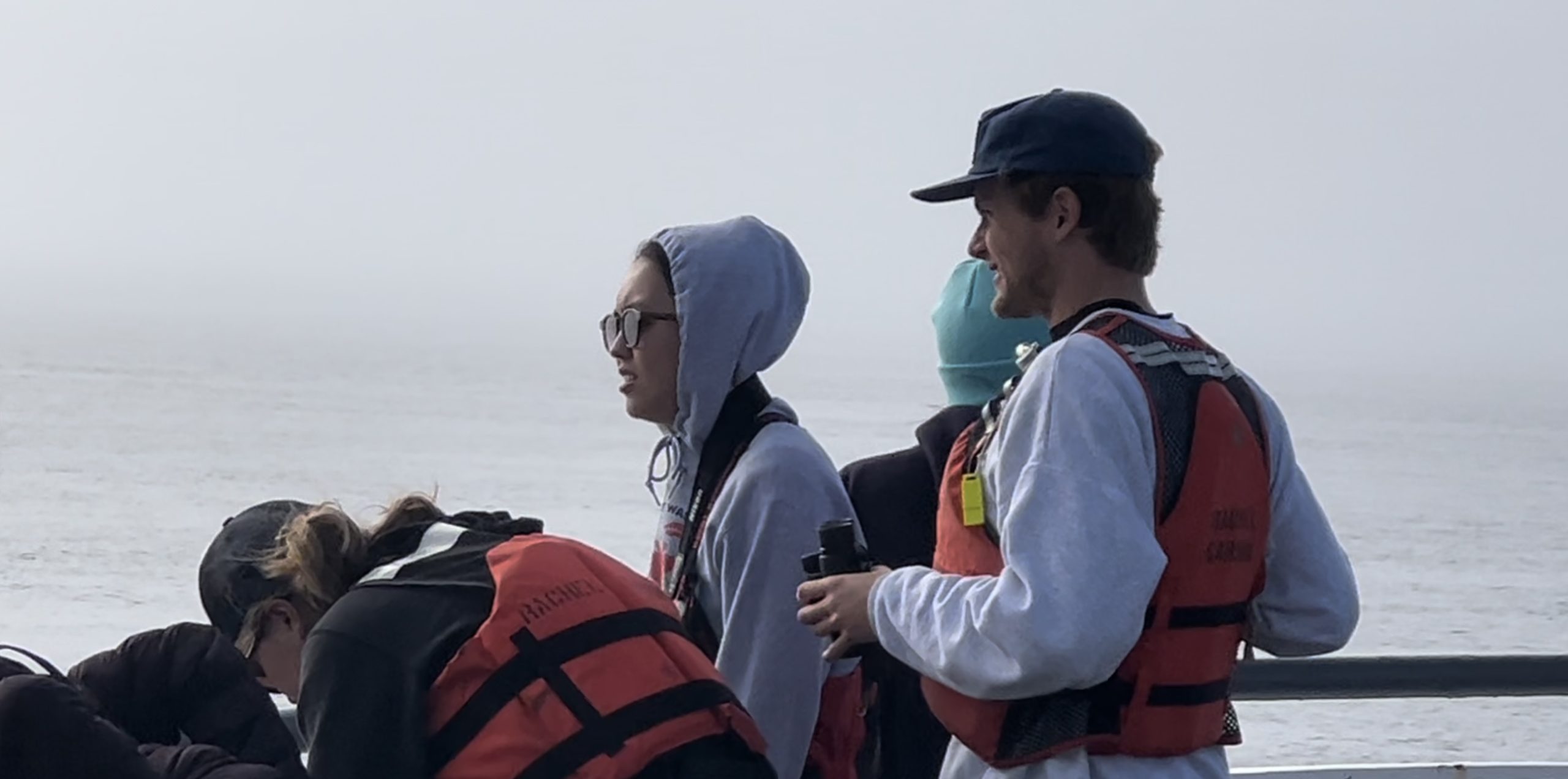
Enrollment limited to 12 students. No textbook is required for this course.
This course fulfills Research (“R”) and Writing (“W”) credits. UW marine biology majors enrolled in this course will earn integrative field experience (IFE) credit.
UW students taking this course are eligible to obtain Mary Gates Endowment scholarships. Check our financial aid page to learn more.